Laparoscopic common bile duct exploration
Operative-video teaching and case discussion may cover exploration strategy, choledochoscopy and escalation decisions.
 Host a course Host course
 Course overview
MyCourse brings consultant-led laparoscopic biliary education to the host department. This overview helps surgical leads compare the course options, audience, subjects, formats and clinical responsibilities before deciding whether to continue.
Who it is for
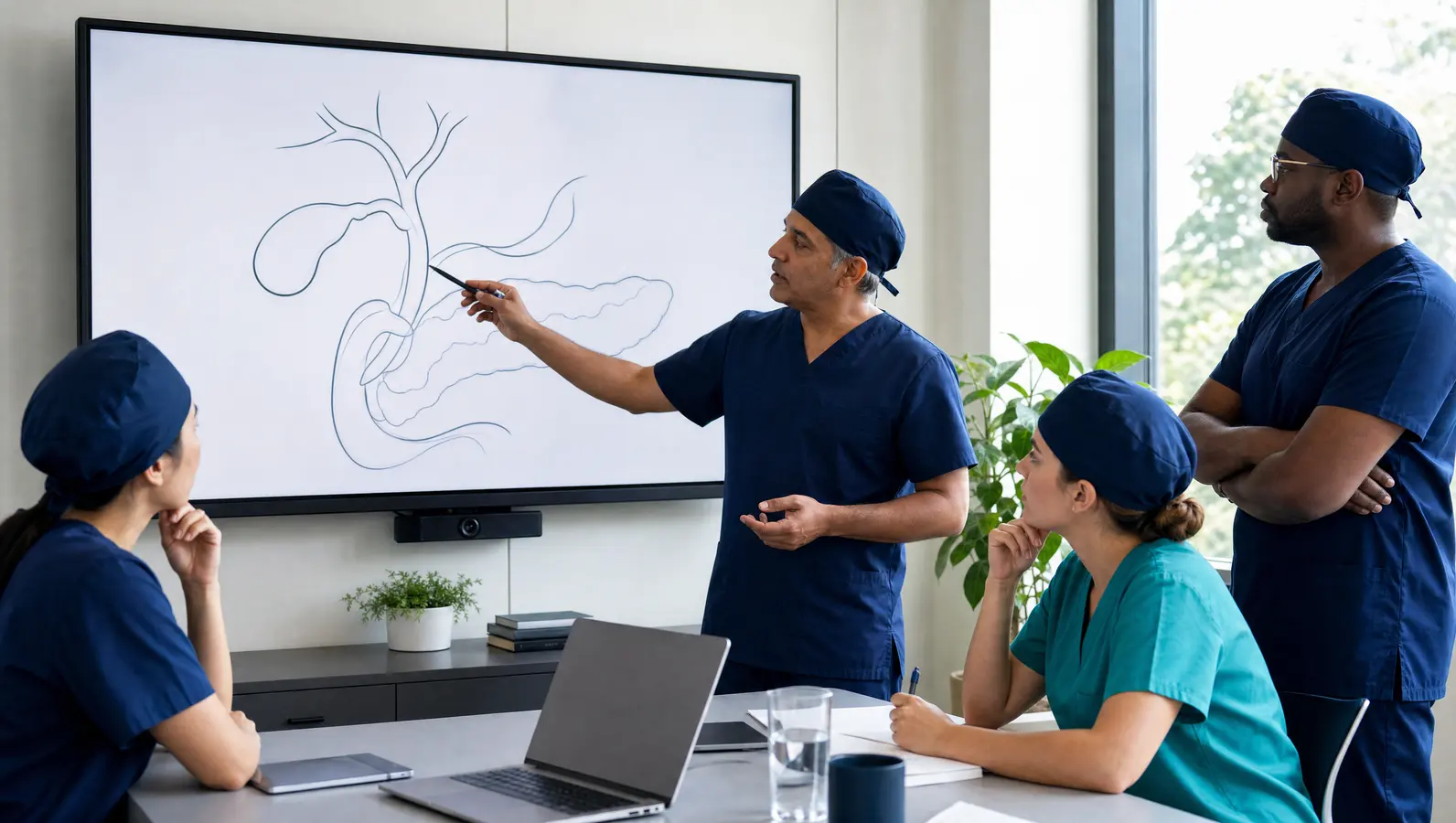
MyCourse is intended for a hospital team with a defined laparoscopic biliary learning need. Depending on the scope, participants may include consultants, senior trainees and theatre colleagues.
The hospital identifies the appropriate attendees and ensures that each person works within their role, competence and local policies.
Hospital-led planning, consultant-led education and a scope agreed before delivery.
Subject areas
An agreed programme can cover laparoscopic common bile duct exploration, complex cholecystectomy and relevant theatre-team workflow, depending on which education need the host hospital selects.
Operative-video teaching and case discussion may cover exploration strategy, choledochoscopy and escalation decisions.
Teaching may address difficult gallbladder cases, biliary anatomy, operative decisions and complications management.
The programme can include the hospital's theatre team, local equipment and agreed working practices.

Teaching approach
Teaching can combine structured explanation, operative video and case-based discussion. Where theatre-based activity is agreed, it must sit within the host hospital's patient-selection, consent, supervision and clinical-governance arrangements.
Format options
A focused programme planned around an agreed teaching priority and the host hospital's timetable.
Additional time for structured teaching, case discussion and theatre-based learning within the agreed scope.
A narrower programme for a defined laparoscopic biliary topic identified by the department.
Planning sequence
The department defines its need, reviews the clinical setting with MyCourse faculty and agrees scope and responsibilities before dates are confirmed.
The discussion begins with the subject, the team's current experience and who may take part.
The hospital and faculty discuss facilities, equipment, timing, case availability and local governance.
Dates, content, responsibilities and any theatre-based activity are confirmed after the required local reviews.
To continue, visit the hospital planning page to see the people, facilities and approvals that help shape an initial course discussion.
Course questions
MyCourse is planned for hospital surgical departments. The appropriate mix of consultants, senior trainees and theatre colleagues depends on the agreed topic and host-hospital requirements.
That is the proposed format. Delivery remains subject to an agreed educational scope, suitable facilities, faculty availability and the hospital's governance approval.
Yes. The course can focus on laparoscopic common bile duct exploration, complex cholecystectomy or another agreed laparoscopic biliary priority.
No. CPD, CME, certification and accreditation are not currently stated for MyCourse. Check the course information again before relying on any future accreditation status.
The host organisation retains responsibility for clinical governance, patient selection, consent, staffing, facilities and care. Final responsibilities must be agreed in writing before theatre-based teaching.